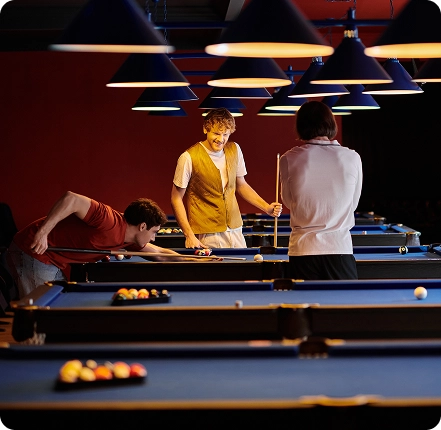
League night has a different energy from a casual evening in the pool room. Players arrive with purpose, cues come out early, and every table starts to tell a slightly different story as warmups turn into real matches.
What makes the night memorable is not only the competition. It is the mix of focus, friendly pressure, and community that keeps people coming back. Some players are there to test themselves, while others are there to improve steadily and spend time around people who love the game.
At Texas Billiards Club, league night is where local players build routine, confidence, and a stronger connection to the room. It gives structure to improvement and creates the kind of atmosphere that turns regular visitors into a real playing community.
League night is where competitive pool meets local community, giving players a reason to keep showing up, sharpening their game, and learning under real match pressure.
What does a league night feel like at Texas Billiards Club?
A strong league room has energy without chaos. There is conversation around the tables, but there is also a clear sense that every rack matters. Players settle in, follow the pace of the match, and react to turning points together.
That balance is what makes the room special. You can feel the competitive edge, but you can also feel the support system around it. A good shot gets respect, a comeback gets attention, and every player becomes part of the rhythm of the night.
- Competitive matches between players with different styles and experience levels.
- A room full of table-side reactions, strategy talk, and familiar faces.
- Moments where one safety battle or one key shot changes the feel of a match.
- A social atmosphere that still respects focus and match discipline.
- A weekly routine that gives players something real to prepare for.
Who is league night for?
League night is not only for top-level players. It is a strong fit for anyone who wants more structure than casual play, whether they are trying to improve, meet other players, or experience competition in a more organized setting.
Newer players often benefit because league play gives them clear situations to learn from. More experienced players benefit because it keeps them sharp, accountable, and engaged with the local pool scene.
- Players who want to improve under real match conditions.
- Regular room visitors looking for more structure and routine.
- Competitive players who enjoy weekly pressure and adjustment.
- Newer players who want to learn from watching and playing around stronger opponents.
What should first-time players expect?
Your first league night usually feels busy at first, but that settles quickly once the matches begin. Expect a room with clear purpose, a steady pace, and players who understand that everyone starts somewhere.
The smartest approach is to arrive early, get comfortable with the tables, and treat the first night as a learning experience. You do not need to be perfect. You need to observe, compete honestly, and let the format teach you how to manage pressure one rack at a time.
- Arrive early enough to warm up and settle your nerves.
- Bring a simple game plan instead of trying to do too much.
- Watch how experienced players manage cue-ball control and decision-making.
- Stay patient if the pace feels different from casual play.
- Use the night to learn what parts of your game need the most work.
Why does league play help players improve faster?
League play creates accountability. You start paying more attention to your pre-shot routine, your position choices, and how you respond after a mistake because every decision carries more weight than it does in a casual rack.
It also gives you repetition in meaningful situations. Over time, that combination of pressure, routine, and community support can build better habits faster than playing aimless sets with no structure.
- You learn to make simpler decisions when the pressure is real.
- You get regular feedback from match results instead of guessing how you are improving.
- You see better patterns by watching how other players solve problems.
- You build consistency by returning to the same competitive environment week after week.